
A new menu, a website refresh and next month’s promotion can all land on the same owner’s desk. The right way to commission that work depends on how much is defined, how often new requests arrive and who will keep decisions moving.
A one-off project gives a defined piece of work its own scope. A design subscription supports an ongoing stream of work under an agreed plan. Either can be a sensible choice. Start with the work itself.
List the work ahead
Write down the design you expect to need over the next few months. Separate confirmed jobs from ideas. Include routine updates as well as larger projects: changing menu prices, preparing a promotion, updating web graphics or creating a new printed piece.
Then add a deadline and a decision-maker to each item. This simple list shows whether you have one substantial project, a recurring workload or several jobs that all need to happen at once.
When one-off work fits
A project arrangement is often useful when the outcome is clear and there is a natural finish. Examples include a defined menu redesign, a set of packaging files or a website with agreed pages and functionality.
A good scope explains the deliverables, the content the client supplies, the review stages and what happens if the brief changes. It should also identify any printing, photography, hosting or other costs that sit outside the design work.
If you only need occasional support, commissioning a specific project can be easier to plan around. Once the work is complete, you can decide separately when another project is needed.
When a subscription fits
Ongoing support becomes useful when new requests are a normal part of running the business. A restaurant might need seasonal menu changes, event graphics and website updates throughout the year. A growing company might have a steady mix of sales materials and digital content.
The value of an ongoing relationship is continuity. Your designer can build familiarity with your brand, existing files and preferences. You still need clear briefs, priorities and timely feedback to turn that familiarity into useful work.
Check how the particular plan handles requests, active tasks, revisions, turnaround, larger projects and pauses or cancellation. A large request list does not necessarily mean every item will be worked on at the same time. The agreed capacity matters, especially near a launch.
Compare the whole arrangement
Price is one part of the comparison. Also consider how much coordination you can realistically do and how predictable your workload is.
- Scope: Which types of work are included, and which need a separate quote?
- Capacity: How are priorities set, and how many tasks can move forward together?
- Feedback: Who gathers comments and gives final approval?
- Handover: Which final and editable files will you receive?
- Timing: What needs to be supplied before work can begin?
A defined project can become difficult if its requirements keep expanding. A subscription can be underused if there are few requests or nobody is available to approve the work. Choose an arrangement your team can actually use.
A mixed approach can work
You may have one large launch project followed by a smaller, recurring stream of updates. In that situation, it can make sense to scope the launch separately and discuss ongoing support afterward. Ask how that handover would work before committing.
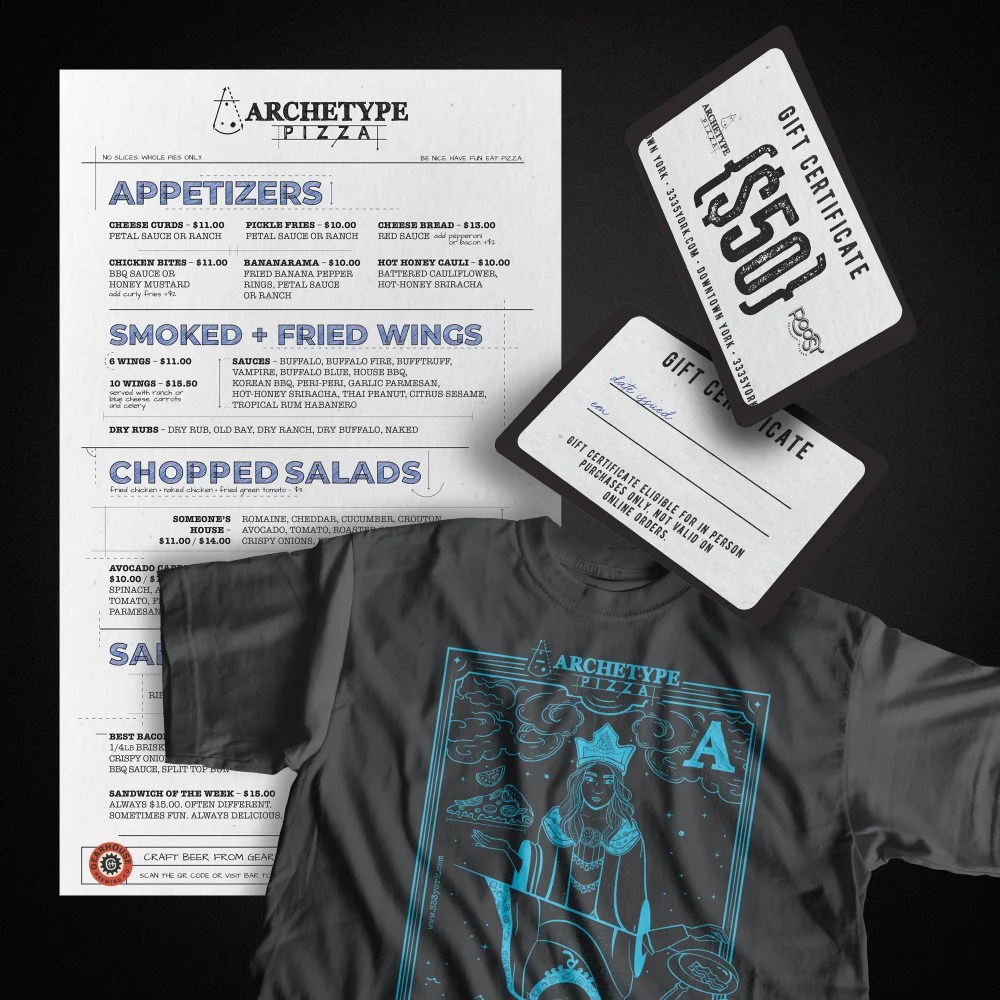
The Archetype Pizza pieces shown here illustrate the range of materials a food business can need: a menu, gift certificates and apparel. The image shows the work, rather than a particular purchasing arrangement. Your own list of deliverables is what should guide the choice.
Bring us your list
Explore the current Avem Noctis plans, or send us a project enquiry with your expected workload and deadlines. We can discuss which arrangement fits the brief before you decide.