
Cyclone Anaya’s
menu design.
Different occasions.
One recognisable restaurant.
A closer look at AVEM NOCTIS’s main, drinks and happy-hour menus, with dessert and promotional print for Cyclone Anaya’s.
Explore our menu design service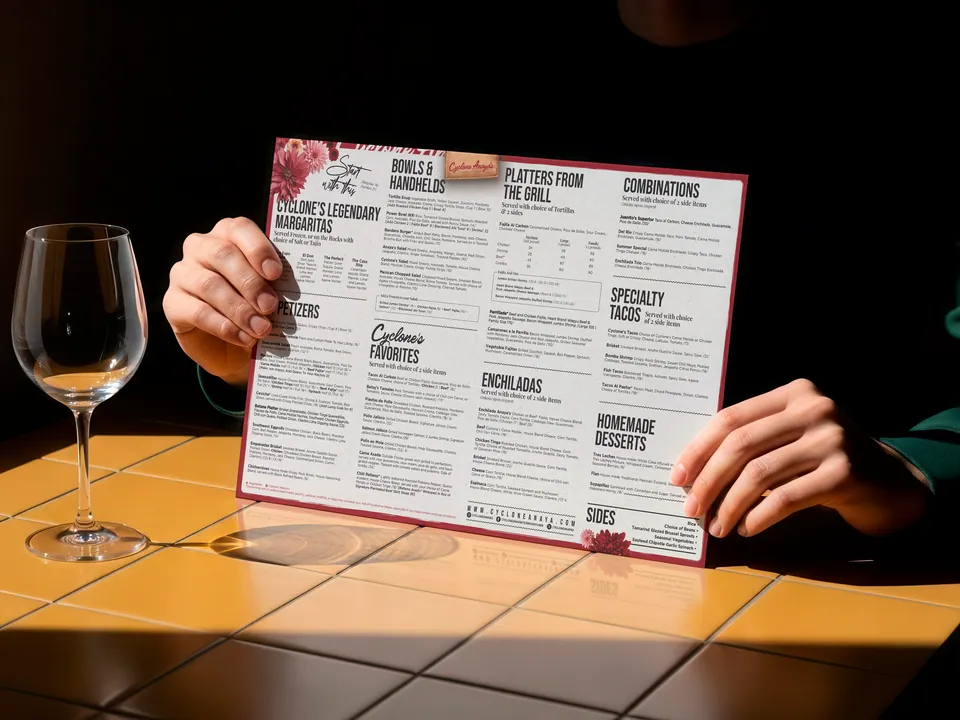
The work in view.
This project brings together pieces that guests encounter at different moments: a full food menu, a drinks list, a happy-hour offer and a tabletop dessert special. Business and discount cards extend that identity beyond the main menu.
This case study examines the delivered artwork shown in our portfolio. The focus is on layout, visual consistency and how the formats differ.
A shared visual language.
The script wordmark connects the pieces. Strong section headings sit above smaller item descriptions, while colour and decorative details give each format its own character.
Consistency comes from those recurring elements. It leaves room to change the composition when a drinks list, a full food menu or a small promotional card needs a different balance.
The main menu.
The main menu carries a substantial amount of information on one broad surface. Columns divide the offer, and bold headings identify groups such as appetizers, combinations, tacos and desserts. Smaller descriptions sit beneath the dish names, keeping the hierarchy visible.
A red perimeter and floral details frame the content without replacing its structure. The important design question here is how to give a guest several clear places to begin reading. Distinct sections make the list easier to navigate than one continuous block of text.
A separate drinks list.
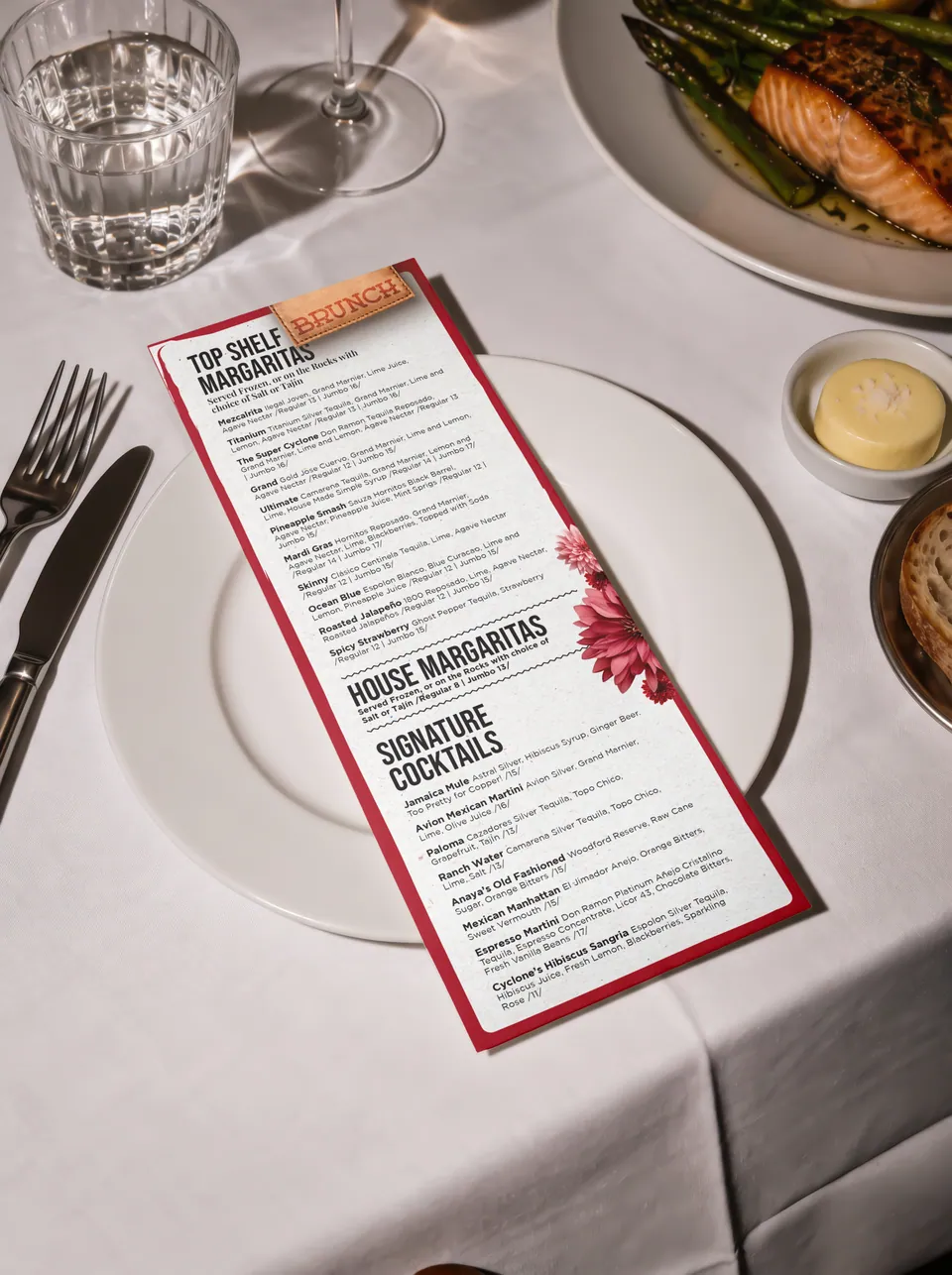
The drinks menu uses a taller, narrower format. The wordmark and red framing connect it to the main menu, but the proportions let the beverage list stand on its own.
Separating this content changes the reading task: a guest can concentrate on drinks without searching through food categories. It also creates a distinct piece that can be placed and handled independently.
For another restaurant, the right choice could be an integrated drinks section. The format should follow the amount of content and how the team presents it.
A different occasion.
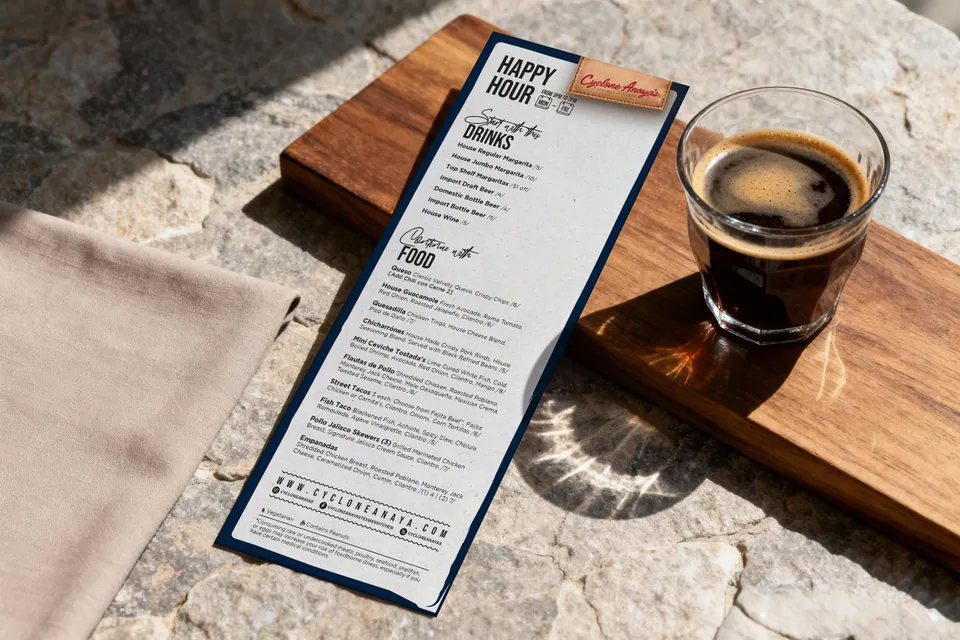
The happy-hour menu introduces a blue border and its own illustration treatment. It still belongs to the same restaurant through its wordmark and clear relationship between headings and items.
A shorter promotional list does not need the main menu’s full composition. Giving the occasion its own piece lets the offer be read on its own terms while keeping the restaurant identity visible.
The lesson is useful beyond happy hour: keep the recognisable parts of the brand, then adjust the layout to the content in front of you.
At the table.
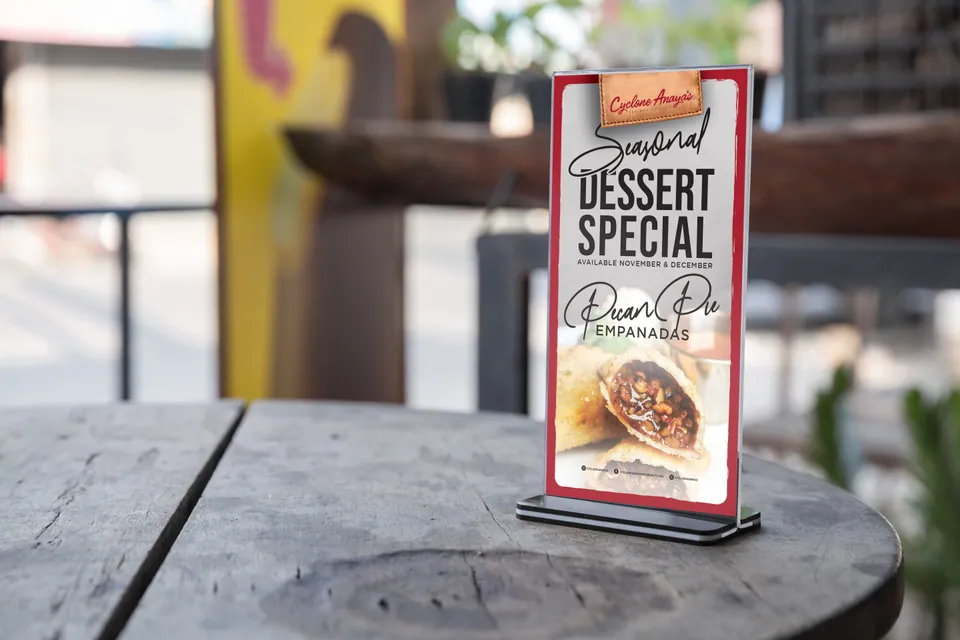
The seasonal dessert display has a different job again. It stands upright and gives the featured dessert a focused presentation, with a large product image and a shorter message than the full menu.
That change in scale matters. A tabletop display is seen while guests are seated; it needs to communicate as a small object in the restaurant, not as a reduced copy of a page.
Its role is to draw attention to a specific item. The complete menu remains the place for the wider offer.
Beyond the menu.
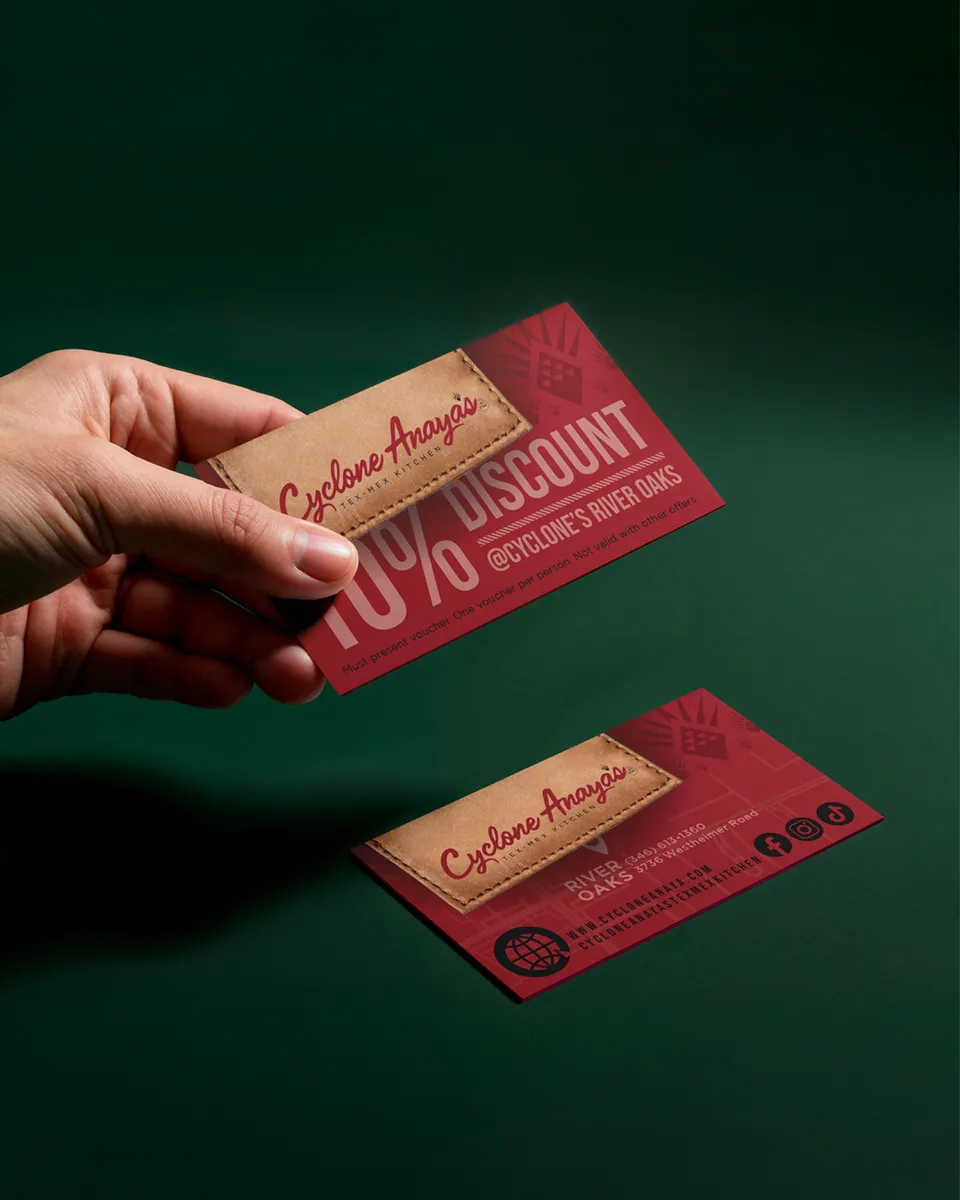
The red discount cards carry the same script identity into a compact format. Here, the offer and its supporting information need room, even when the physical piece is much smaller.
These supporting materials show why a menu project is worth reviewing as a set. A restaurant may need food and drinks menus today, then a special, card or sign later. A clear visual language gives those future pieces something to build on.
What carries across.
Recognition
The wordmark connects the formats even when the colours and proportions change.
Hierarchy
Headings, items and descriptions have distinct jobs. Their visual treatment helps keep those jobs separate.
Fit
The main menu, drinks list and dessert display each use a layout suited to their content and physical format.
The delivered work is a connected family of menus and print, with a shared identity and a distinct layout for each format.
Planning a menu family?
List every version your team needs before commissioning the first layout: main, drinks, happy hour, takeaway and seasonal pieces. Identify shared content and the information that changes independently. That gives the design a useful structure from the start.
Use our menu design brief guide to organise the content, or explore our restaurant menu design services to see how we approach a project.
Let’s work on your menu.
Tell Ivana and Levent what you serve, which menus you need and when you hope to launch. We’ll use that to propose a scope.
Request a menu design quotePrefer email? Write to our studio.